Enter your email and get instant access to:
- Our Free 12 page Report, "Kick-Start your Spanish", delivered straight to your inbox
- The latest news and cool Spanish from Notes in Spanish
Email:
(We will never send you spam or share your details with others.)


Our Spanish Audio

NiS Beginners
NiS Intermediate
NiS Advanced
 Podcast feeds


Important Resources

Our Best Learning Packs


About us...

About Us


The Learn Spanish Fruit and Vegetables Video Quiz!

Context

In our latest Spanish learning video Ben and Marina begin by explaining how Marina’s sister and her boyfriend came back from a Kitesurfing holiday in Brazil keen to improve their eating habits, and started buying more fruit and vegetables from the local market.

This reminded us about how lots of children these days don’t know the names of many fruit and veg, and so we thought we’d test your knowledge of the names of fruit and vegetables in Spanish! Watch the video and see how many you get right!

Spanish vocab and phrases from the video

Hacer kitesurfing – To do kitesurfing
Le gusta mucho hacer kite – He really likes kitesurfing
Han vuelto con muchas ganas de cambiar su estilo de vida y llevar una alimentación mas sana – They’ve returned [from holiday] really keen to change their lifestyle and eat more healthily
[En el mercado] se supone que la verdura y la fruta es de mejor calidad – In the market the fruit and vegetables are supposedly better quality
[La fruta y verdura] no ha pasado tanto tiempo en cámaras – The fruit and vegetables haven’t spent so long in refrigerators
Un limón – A lemon
Un aguacate – An avocado
Una berenjena – An Eggplant/Aubergine
Un calabacín – A zucchini/courgette
Una manzana – An apple
Una calabaza – A squash/pumpkin
Lo tengo en la punta de la lengua – It’s on the tip of my toungue
Un plátano (de Canarias!) – A banana (from the Canary Islands!)
Están super ricos – They are really nice/tasty
Una mandarina – A mandarin/tangerine
Una Clementina – A Clementine
Una nuez – A walnut
Un cascanueces – A nut cracker
Un cazo – A ladle
Un mortero – Pestle and Mortar
Una cabeza de ajos – A bulb of garlic
Un diente de ajo – A clove of garlic
¡Tampoco te pases! – Don’t go over the top!

And finally, Marina rembered a typical Spanish phrase with apples:

¡Estoy mas sana que una manzana! – I’m really healthy!

More Great Spanish Learning Resources…

- Learn Spanish with our best materials: Our free Spanish Learning Audio / Podcasts and the Premium Materials in our Store
- Watch more of our Spanish learning videos here
- Sign up for our Spanish-boosting newsletter here

Great Spanish Learning Tips and Resources!

Good Morning! Here are four great ways to start your week with a huge boost to your Spanish!

1. Watch Our First Ever Videoblog – on our Facebook page

Spanish video blog

Five Years ago we made our first ever video blog – see how nervous we were! I’ve posted it to the Notes in Spanish Facebook page, if you are a Facebook user, please ‘like’ the page, then you’ll know when we post more goodies there from time to time.

(If you are a non-facebook person, then you can watch the video on youtube too!)

2. Listen to one of our Q and A’s!

Can you answer these questions?

Q — ¿Qué significa “tener una chinita en el zapato”?

Q — What does the expression “aquí hay gato encerrado” mean and when do you use it?

Q — How do we move on from thinking in our own language first and translating in our head before speaking, to being able to listen, decipher and answer in Spanish smoothly?

We answer all these questions and more in a great Q and A audio we made just over a year ago, before we launched our Gold Two series. It’s a very enjoyable way to spend 25 minutes! Listen/download it here now.

3. Dar x 34!

Nos encanta daros cosas interesantes! – We love giving you interesting things!

…like our “34 Uses of Dar!” Special Report – have you got it yet, do you know them all?

4. Keep Listening to our Audio!

Without doubt, the very best thing you can do for your Spanish is to keep listening to our real Spanish conversations!

Have a great Spanish learning week and please feel free to share these Spanish learning resources with your friends!

Saludos desde Madrid,

Ben y Marina

Very Popular Spanish Christmas Carol!

Here’s a montage that someone on youtube put together of a very typical Spansih Christmas carol… Lyrics and notes below…

About the Carol: For a long time I thought this Christmas carol, or villancico as they are called in Spanish, was, well, a little hortera – tacky. But then I started to like it, and now it’s just a great part of Spanish Christmas! Here below are the lyrics (with key vocab translations in brackets) if you are interested. One key word is of course ‘Belén’ – which as well as being a common girls name, also means Bethlehem (as in this carol), or Nativity Scene.

The Lyrics: Campanas Sobre Campanas

Campana sobre campana, [campana = Bell]
y sobre campana una,
asómate a la ventana, [asomarse = look out/lean out... of the window]
verás al Niño en la cuna. [cuna = babies cot/crib]

Belén, campanas de Belén,
que los ángeles tocan
¿qué nueva me traéis?

Recogido tu rebaño [rebaño = flock]
¿a dónde vas pastorcillo? [pastorcillo = little shephard]
Voy a llevar al portal
requesón, manteca y vino. [requesón = cottage cheese/curd, manteca = lard/butter]

Belén, campanas de Belén,
que los ángeles tocan
¿qué nueva me traéis?

Campana sobre campana,
y sobre campana dos,
asómate a esa ventana,
porque está naciendo Dios.

Belén, campanas de Belén,
que los ángeles tocan
¿qué nueva me traéis?

Campana sobre campana,
y sobre campana tres,
en una Cruz a esta hora,
el Niño va a padecer. [padecer = suffer]

Belén, campanas de Belén,
que los ángeles tocan
¿qué nueva me traéis?

¡Feliz Navidad!

Ben y Marina

¡Feliz Navidad! Spanish Christmas Vocabulary and Phrases

Madrid's Retiro Park in the snow

Image: Madrid’s Retiro Park in the snow

As Marina and I are preparing for Christmas here in Madrid, we want to take a moment to wish all the Notes in Spanish listeners a very very ¡Feliz Navidad!

If you would like to know more about Christmas in Spain, and learn some Spanish Christmas vocab and phrases, then we have special Christmas audio for every level:

Inspired Beginners 16 – ¡Feliz Navidad!

Intermediate 12 – Navidad

Advanced 86 – Feliz Navidad

Do take 10 minutes to listen to the audio for your level with the appropriate worksheet, and make this a very Spanish Christmas as well!

Best wishes from Spain,

Ben y Marina

Gracias a la Vida – Y a Vosotros…

[Note: When it appears, click the 'x' on the right of the ad at the bottom of the video to get rid of it (we didn't put it there!) and you can see the subtitles. The subtitles change to Portuguese after the song ends and she begins to speak Spanish.]

We think this is the most beautiful ‘Thank You’ song on the planet. Happy Thanksgiving – Feliz día de Acción de Gracias. Muchas Gracias por tu dedicación y por aprender español con nosotros.

Saludos desde Madrid,

Ben y Marina

We all make Spanish mistakes! And it’s OK!

I, Ben, recently sent out an email with a BIG error in the subject line, which started “Última día!”

Boy did I get some quick feedback on that! For example:

“Dear Ben and Marina,

You’ve really blown your credentials with the first word of this message.

Día, although ending in an ‘a’, is a masculine noun, so you should have written ‘Último‘. Alternatively, you could have written ‘Última hora!’ since hora is feminine.”

Yes, quite right, I should have written “último día” – it’s a humiliating mistake, but that’s what happens if I write emails at 7a.m. without getting Marina to check the Spanish (which she usually always does, don’t worry!)

So, I blew my credentials a little bit (but not Marina’s!), but there is a plus side to all this…

It’s OK to get caught out making mistakes in Spanish, as you learn MORE and never make the same mistake again!

You can be sure I’ll never make that one again! In my defence, ‘día’ is one of those tricky words that looks feminine (because of the ‘a’ on the end) but is actually masculine.

Others include:

El sofá
El tema
El clima

or the other way round…

La mano

It’s totally unfair of these words to trick us like this!

Keep improving your Real Spanish with our Spanish Audio Conversations and the fantastic supplementary materials in our Store.

Great Spanish Colloquial Phrases With ‘Miedo’

Miedo (Fear) is another great Spanish word that changes meaning completely depending on whether it is used literally or colloquially:

Literal Meanings:

Ay, ¡me das mucho miedo! – Ah, you’re really scaring me! (For ‘ghosts’ at Halloween!)

Hubo una gran tormenta mientras íbamos caminando por el campo y pasamos mucho miedo – There was a big storm while we were walking in the countryside and we got really scared

Una película de miedo – A horror film

Colloquial Meanings:

Miedo is also used colloquially here in Spain (by people of all ages) to mean something is great:

Este helado está de miedo – This ice cream is amazing

Fuimos a los Alpes este verano y lo pasamos de miedo – We went to the Alps this summer and had a fantastic time

Trick or Treat! Halloween Spanish!

Halloween Spanish

It’s Halloween time in Spain, and the streets are full of witches, ghouls and ghosts! We’ve got some special treats for you (and no tricks!) – Some great ‘scary’ Spanish vocab and phrases!

The Super-Useful, Real Spanish ‘Scary’ Vocab and Phrases!

Here are some ‘frights and scares’ Spanish phrases for you to use all year round, and not just at Halloween!

Asustar – To scare someone or give someone a shock

¡No me asustes! – Don’t scare me

Ben: No arranca el coche – The car won’t start
Marina: ¡No me asustes, que acabo de recogerlo del taller! – Don’t scare me like that, I just picked it up from the workshop!

Un susto – a shock

¡Qué susto me has dado! – What a fright you just gave me (e.g. when someone comes into a room without you noticing)

¡Qué susto me ha dado el perro! – What a shock that dog gave me

Me llevé un susto que no veas / me he dado un susto de muerte – I got a really big shock (for really serious situations/shocks)

Ha habido un accidente de tráfico justo delante mío, y pensé que no iba a frenar a tiempo. Me he dado un susto de muerte. – There was a car accident right in front of me, and I thought I wouldn’t be able to stop in time. I got a terrible shock.

¡Qué susto, un vampiro! – What a fright, a vampire! (When your neighbour appears in his vampire costume this halloween!)

6 of the Best! Really Useful Spanish Q and A…

Here are 6 of our favourite Q and A’s from our top-end Gold Series. See if you knew the answers:

Q—How do I say “flush the toilet” politely?

ATirar de la cadena — Pull the chain (flush). There’s actually no impolite way to say it!

Q—What are some ways to give compliments on food/clothing/etc?

A—There are hundreds! Here are a few great ones below:

Que guapa estás — You look really good.
Que bien te sienta ese (jersey / abrigo) — That (shirt / coat) looks really good on you.
Que buena pinta — It looks delicious (for food).
Huele que alimenta — It smells great (for food).

Q—I’m a mother and I’m always the one who has to interrupt or wrap up chatting with my intercambio on skype; how can I do it without sounding too abrupt?

APerdona Sara, me encantaría seguir hablando contigo pero … — Excuse me, Sara, I’d love to keep chatting with you but …

… me tengo que ir a recoger a mis hijos al colegio — I have to pick my kids up from school.
… me tengo que ir al gimnasio / al supermercado — I have to go the the gym / to the supermarket.
… me tengo que ir a preparar la cena — I have to go make dinner.
… me voy a tener que ir — I’m going to have to go.

Q—Should I use “hacer” or “estar” when I’m talking about the weather?

A—When the weather is “doing” something, we use “estar,” except for wind.

Está lloviendo — It’s raining.
Está granizando — It’s hailing.

When it’s the general state, use “hacer.”

Hace bueno — It’s a nice day.
Hace calor — It’s hot.

Exception: Hace mucho viento — It’s very windy.

Q—How can I use “a lo mejor”? It seems to be used a lot.

A—A good translation would be “maybe.”

A lo mejor, te voy a ver esta tarde — Maybe I’ll come and see you this afternoon.
A lo mejor, nos vamos a Londres este verano— Maybe we’ll go to London this summer.

Q—Could you give me an interesting Spanish phrase to write on the front of my recipe book?

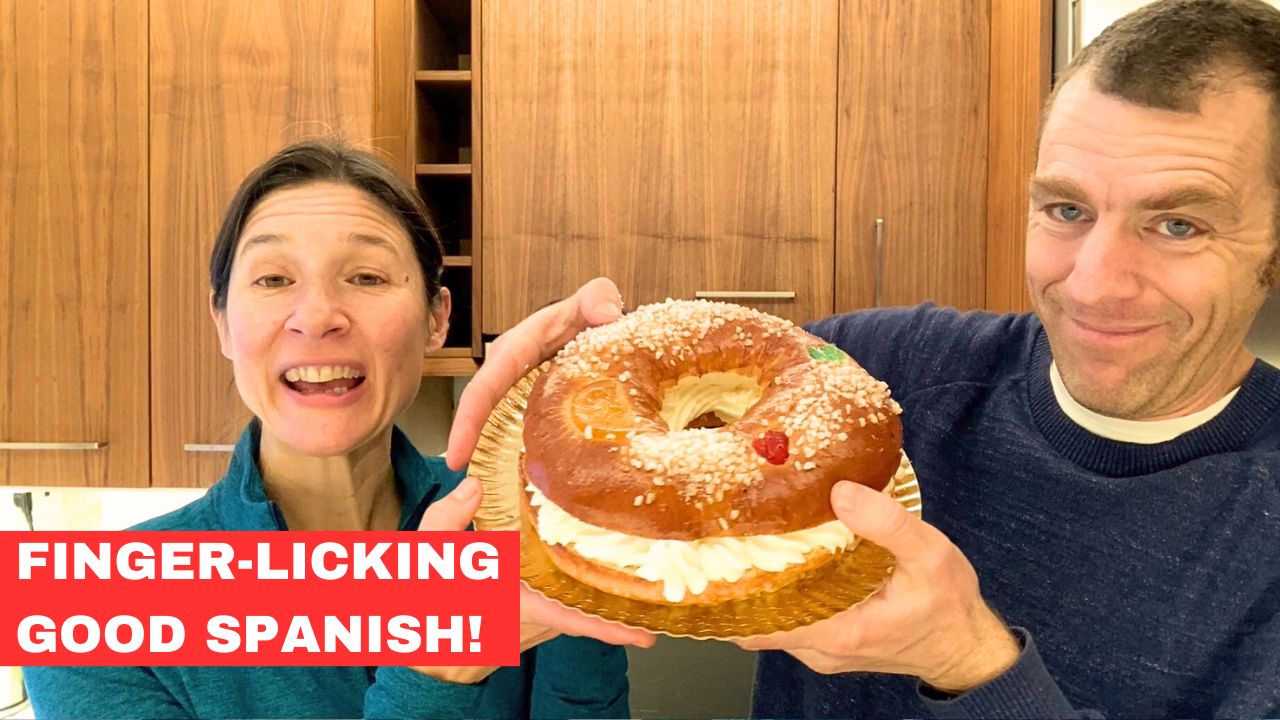
AEstá para chuparse los dedos — It’s finger-licking good.
Un minuto de placer en la boca y toda una vida en la cadera — A minute of pleasure in your mouth and a lifetime on your hips.

But the best of all is…

You hear this last one non-stop, for sub-par meals or for example when someone drops a piece of bread on the floor but picks it up, brushes it off and eats it:

¡Lo que no mata engorda! — What doesn’t kill you makes you fatter! …this phrase, accompanied by a shrug, will make you sound super-good at Spanish!

¿Qué tal las vacaciones? Spanish Holiday Expressions

La Selva Negra

Un lago en la Selva Negra…

Here is a quick round up of our summer holidays incorporating some useful Spanish expressions (in bold):

¡Ya estamos de vuelta! – We are back!

Hemos recorrido 6,500 km en coche por todo europa – We’ve covered 6,500 km around europe in the car.

Es posible que nuestro pobre coche no vuelva a ser el mismo… – It’s possible our poor car will never be the same again… [Note the Subjunctive (vuelva, from volver) after 'es posible que' - have you got our Super-Subjunctive report yet?!]

Pasamos por Francia, Inglaterra, y Alemania… – We went through France, England and Germany.

Lo que mas nos gustó fue la Selva Negra – What we liked most was the Black Forest.

La vuelta desde Alemania se nos hizo un poco larga – The return journey from Germany felt a bit long.

Aproveché la visita a Francia para recuperar mi francés – I made the most of our time in France to get my French going again.

He metido la pata en varias ocasiones intentando hablar en francés y alemán – I put my foot in it a few times trying to speak French and German!

[This last point reminded me how easy it is to meter la pata in Spanish - see our essential “Top Ten Dead-Giveaways That You’re a Foreigner Speaking Spanish, Even if You Speak Well …!” post for how to avoid common Spanish mistakes!]

Feel free to leave us a comment below about how your summer went, using some of the expressions in bold above if you like, and keep up with your great Spanish learning progress using our real Spanish audio conversations and worksheets!