

Enter your email and get instant access to:
- Our Free 12 page Report, "Kick-Start your Spanish", delivered straight to your inbox
- The latest news and cool Spanish from Notes in Spanish
Email:
(We will never send you spam or share your details with others.)


Our Spanish Audio

NiS Beginners
NiS Intermediate
NiS Advanced
 Podcast feeds


Resources

Our Best Learning Packs


About us...

About Us


Learning Spanish – Tips and Resources

“Top Ten Dead-Giveaways That You’re a Foreigner Speaking Spanish, Even if You Speak Well …!”

We recently received an email asking for a list of the biggest ‘dead-giveaway’ mistakes a Spanish learner typically makes. We put a call out on the forum at our sister site Notesfromspain.com asking for help, and this is the list you helped us come up with:

Dead-Giveaway 1: Past Tense Confusion

Getting confused by the difference between the pretérito indefinido (canté/estuve/escribi) and the pretérito imperfecto (cantaba/estaba/escribía).

Solution: Check out our Inspired Beginners Podcast number 19 (great no matter what your level!), where we look at how these two key past tenses, the Pretérito Imperfecto and the Pretérito Indefinido, can be used together to tell a great story in Spanish.

Dead-Giveaway 2: Por/Para

No getting away from these two – you have to knuckle down and learn the differences, but fear not, soon it becomes second nature, and we have the perfect…

Solution: Listen to our Inspired Beginners Podcasts 27 (Por) and 28 (Para) (again, our Inspired Beginners reviews are great for all levels!)

Dead-Giveaway 3: The Rolling ‘R’

There is a subtle difference between the pronunciation of ‘r’ and ‘rr’, for example in pero/perro, caro/carro, and many Spanish learners are convinced they will never be able to pronounce a proper rrrrrolling ‘r’.

Solution: Practice! Ben was convinced he couldn’t do it either, but endless attempts have led to a half-decent ‘perro’ – so don’t give up, just rrrrrr all day long, and pay careful attention to how Spanish speakers differentiate between the two.

Dead-Giveaway 4: Ser/Estar

Just as with Por and Para, the Ser y Estar ‘problem’ drives many Spanish learners mad, but worry not! We have a a very good bit of audio to sort these two out as well!

Solution: Listen to Inspired Beginners 23, Ser y Estar

Dead-Giveaway 5: ¡Doy Propinas Demasiado Grandes!

Giving excessive tips (propinas) is a sure sign of being a foreigner on holiday in Spain. Spaniards tend to leave somewhere between no tip at all (when drinking in bars, or for a menu del día at lunchtime), to around 5% (if service is really good, usually at dinner in the evening or for a smart lunch).

Solution: Do as they do and don’t feel guilty about it! Spanish waiters receive a fixed wage, but tips make a nice extra.

Dead-Giveaway 6: Using “El Subjuntivo”

It’s not such a nightmare as you think to start using the subjunctive! You have to start eventually, and if you are at a comfortable intermediate level, nows the time to get going!

Solution: Have you downloaded our mega subjunctive report yet? We also cover a lot of subjunctive usage in the analysis section of many of our special Gold Audios.

Dead-Giveaway 7: Word Order and More…

Failing to make adjectives and verbs agree with the gender and number of objects/people… word order in sentences… using the right prepositions… This covers an awful lot, but the solution to all of these problems is the same…

Solution: It helps a lot to find someone to correct your mistakes as they happen. Marina constantly corrects Ben’s mistakes in our audio (and these are genuine mistakes!) Find an online or real-life intercambio and ask them not to worry about correcting your mistakes – making mistakes and having them corrected is the best way to learn!

Dead-Giveaway 8: Falsos Amigos

Why does Actualmente mean Currently (and not actually, which is de hecho), and how can Sanidad mean health system (and not sanity, which is juicio or cordura)?

Solution: We have a special report for this too available here, with a complete list of false friend pairs and more!

Dead-Giveaway 9: Saying Please and Thank You Too Much!

The British, to name but one nationality, use please and thank you quite a bit more than the Spanish use ‘por favor’ and ‘gracias’.

Solution: Don’t worry about it, we don’t think there can be too many ‘por favor’s and ‘gracias’ in the world, so keep throwing them in whenever you would in your own language, and save your efforts for bigger challenges like Por/Para and the Subjunctive!

Dead-Giveaway 10: The Gender of Words

How annoying that the Spanish language has to decide if things are Masculine or Feminine! What’s more, there are ‘trick’ ones that really look like they should be the other way round, like ‘la mano’, ‘el sofa’, ‘el problema’, and ‘el tema’.

Solution: You’ve just got to learn them! But don’t worry, the exceptions to the obvious, like those above, are few! There is further discussion (with more examples) of this in the second Q and A recording in Notes in Spanish Gold:

Get Notes in Spanish Gold Here

Spanish False Friends Report – How To Avoid Major Embarrassment!


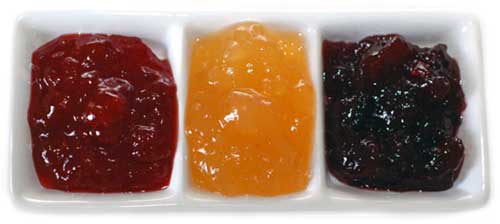
False Friends: Don’t get your marmalades mixed up!

To celebrate the public launch of Notes in Spanish Gold (our best audio ever!) we’ve got another great free report for you, with a huge list of over 50 crucial Spanish false friend pairs.

You can download the report below, but do read this classic Spanish-confusion-nightmare tale first:

Why are False Friends important? Some of you may have heard this story before, but it’s worth repeating as a bit of a warning!

NIS listener Courtney sent us this great confession recently, about a somewhat embarrassing experience during the very first day with her host-family in Spain:

“Nunca lo olvidaré: Yo desayunaba con mi nueva “familia” española el primer día que yo llegué a su apartamento en Salamanca. Yo comía un pan dulce con una mermelada bien sabrosa. Les dije a mis “padres”: “¡Ay, que rico! Me encantan estos preservativos….”

At which point the whole family fell about laughing! Courtney, trying to be nice about their preservative jam, had just told them how much she loved their condoms!

The word she was looking for was “mermelada”, of course!

The special false friends report we’re giving away here to celebrate the launch of Notes in Spanish Gold this Monday, has a list of over 50 of these tricky false friend pairs, to make sure you never make an error like that one!

Download it here now:

Download: Notes in Spanish Falsos Amigos Special Report PDF

Important Extra News:

1. If you haven’t got our Spanish Subjunctive 21 page report yet (that basically demystifies it forever!), then get it here right now.

2. Did you see this weeks videos yet? If not, do check out the latest, ‘Our Big Vice’, with the brand-new analysis section in the second half (a winning concept taken straight from our new Gold audio). Watch it here.

2. Notes in Spanish Gold has previously only been for a handful of private members. This is our best work yet! We can’t wait until everyone gets a chance to find out…

Update: Notes in Spanish Gold is available now in our store!

New! Our Real Spanish Phrase Book and Audio Guide!

When I started learning Spanish here in Spain over 10 years ago, one of the things that most motivated and inspired me was picking up and trying out the real Spanish phrases and expressions used by Spanish people in their everyday conversations. With Marina’s help I’ve been collecting these colloquial expressions for years, and at last we have finished a really exciting project that means we can share them with you.

Our Real Spanish Phrase Book and Audio Guide contains over 100 of these wonderful, typical Spanish phrases, with over 1 hour and 20 minutes of exclusive audio that won’t be released in any of the usual podcast feeds. We really think this is going to be tremendously useful and exciting for anyone learning Spanish, no matter what your level.

Check it out here for full details:

The Real Spanish Phrase Book and Audio Guide

Advanced Spanish Podcast 91 – El Móvil

Audio clip: Adobe Flash Player (version 9 or above) is required to play this audio clip. Download the latest version here. You also need to have JavaScript enabled in your browser.

[Download MP3]

Mobile phone madness in the Metro, golfing in bed, and those infernal ring tones… Click the Play button above to listen now!

Did you know… You can learn so much more when you use our special worksheets with this audio… Having the full transcript and Advanced Vocab List on hand for this episode will make a huge difference to the speed with which you reach Real Spanish Fluency. Get immediate access to the whole set in The Advanced Super Pack – Click Here Now!

Ask any question about learning Spanish!

It’s ‘promote the forums’ time here at notesinspanish.com! Why? Because they are the best place we know to clear up any doubts you may have connected to absolutely anything to do with learning Spanish! Got a question about verb tenses, learning techniques, or language courses? Head over to our forums, register, and ask away!

There are loads of nice people in there waiting to help, and the Learning Spanish section is full of useful information! (Ever wondered how to compliment men in Spanish for example!?)

Find our forums here!

Harry Potter 7 – in Spanish already?

Reading Harry Potter books in Spanish is a great way to practice your reading… once you get used to the strange names of all the spells and so on. The official Spanish translation of the latest book won’t be out for months, but it looks like one inspired fan has produced his own unofficial translation already… now that’s fast!

More resources… Beginner’s widget and Latino sounds

Alexander Atallah has updated his excellent Notes in Spanish Mac widgets to include our new beginner’s Spanish podcast – you can download all the widgets from his site. Thanks again Alexander!

For those of you that love Spanish and Latino tunes, then don’t forget to check out the Ritmo Latino podcast – lots of great music there!

Siempre M antes de P

Echando la vista atrás a mis años en el colegio, y a los problemas que tuve para escribir sin faltas de ortografí­a, me vienen a la cabeza dos reglas muy fáciles pero muy útiles:

-m siempre antes de p – es decir delante de una p nunca escribiremos una n siempre será una m.

Ejemplos:

    Ca-mp-ana

    Co-mp-ás

Incluso en palabras compuestas donde originalmente usamos una n, transforman su escritura a m si van seguidos de una p

Ejemplos:

    Cien+pies = Cie-mp-iés

    Cien+pozuelos = Cie-mp-ozuelos

-m siempre antes de b – en este caso usaremos una m antes de una b y nunca una n. En caso de que se use una n está irá seguida de v en vez de b.

Ejemplos:

    Co-mb-inar

    Co-nv-ento

Spanish Music

Listening to music is a great way to learn a language, especially with all the lyrics sites on the net these days. There is a huge discussion in the forum about great Spanish bands, but at the moment I am really enjoying the catchy tunes from Julieta Venegas, a Mexican singer who is doing well in the charts over here with hits like Me Voy.

Here’s the video for her latest song, Limon y Sal (direct youtube link, and lyrics here):

Un idioma sin fronteras

Ben y Marina en el estudio

Muchos de vosotros ya habréis leí­do en el foro que Ben y yo fuimos a Radio Nacional de España a grabar una edición del programa “Un idioma sin fronteras” dedicada a Notes In Spanish. Podéis escuchar la entrevista completa aquí­.

Un idioma sin fronteras es una fuente de audio dedicada por completo a la lengua española y literatura hispánica. Me gustarí­a recomendaros alguna de sus secciones, como el cuento de la semana y poesí­a en la calle.

Foto: Ben y Marina con Isabel Cavanillas y Rubén Vidal.